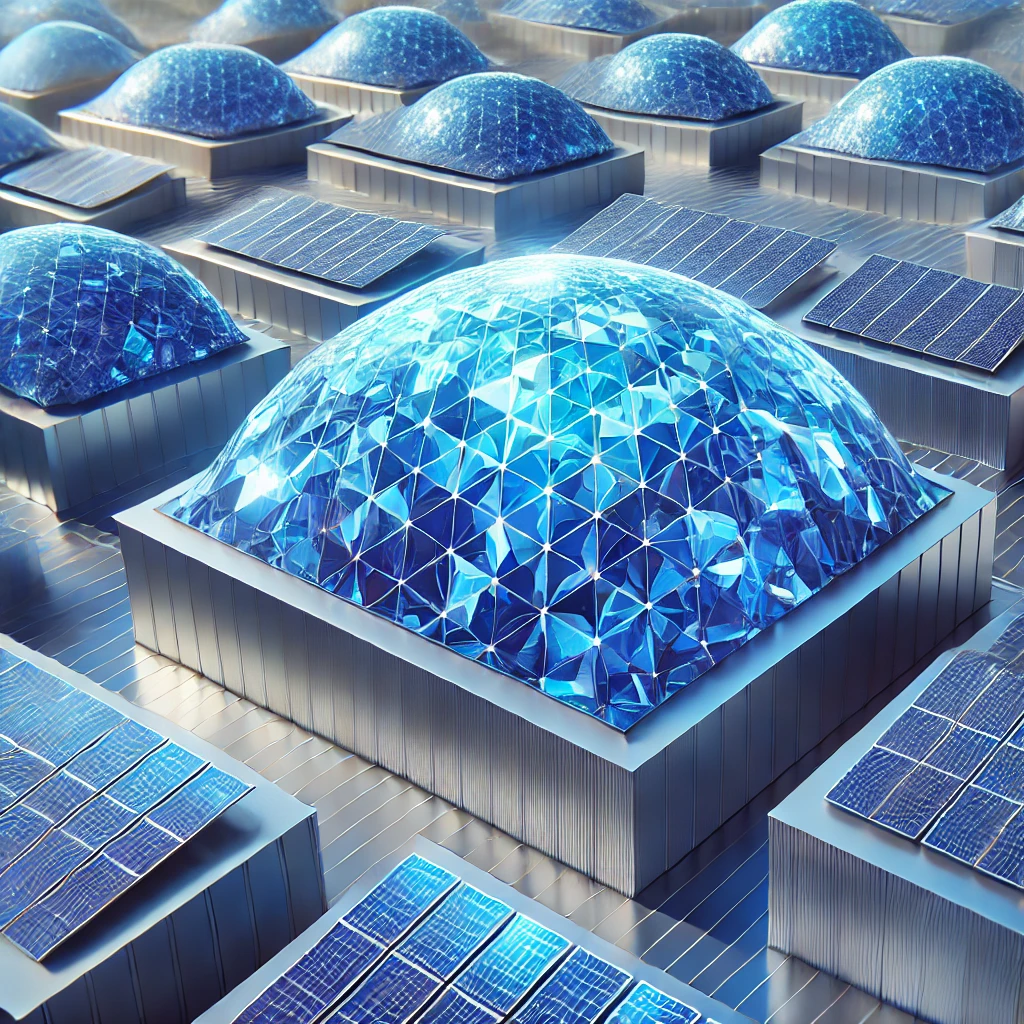
Solar panels are a technological breakthrough that converts sunlight into electricity. Today, they are increasingly used for residential, commercial, and industrial purposes to enhance the efficiency of solar energy utilization. Solar panels are broadly categorized into three types: monocrystalline, polycrystalline (also known as multicrystalline), and thin-film amorphous solar panels.
Monocrystalline Solar Panels
Monocrystalline solar panels are made from high-quality silicon and are typically black in color. They are capable of converting sunlight into electricity with high efficiency, thanks to their uniform crystalline structure. These panels are among the most expensive on the market, but they offer the highest efficiency, generally around 20%.
Polycrystalline Solar Panels
Polycrystalline solar panels are made from multiple silicon crystals and usually have a blue hue. They are less expensive than monocrystalline panels but also slightly less efficient, with an average efficiency of about 15-17%. Nonetheless, these panels are widely used and are a suitable choice for many residential and commercial buildings.
Thin-Film Amorphous Solar Panels
Amorphous solar panels are the most affordable type and are made without a crystalline silicon structure. They can operate under lower light conditions and can be made from flexible materials, making them easy to install on various surfaces. However, their energy conversion efficiency is lower, typically between 7-10%.
Conclusion
The advantages of using solar energy are numerous, including environmental friendliness, resource conservation, and continuous power supply. Each type of solar panel has its own unique characteristics and applications. Therefore, when choosing a solar panel, it is important to consider its efficiency, cost, and installation possibilities.